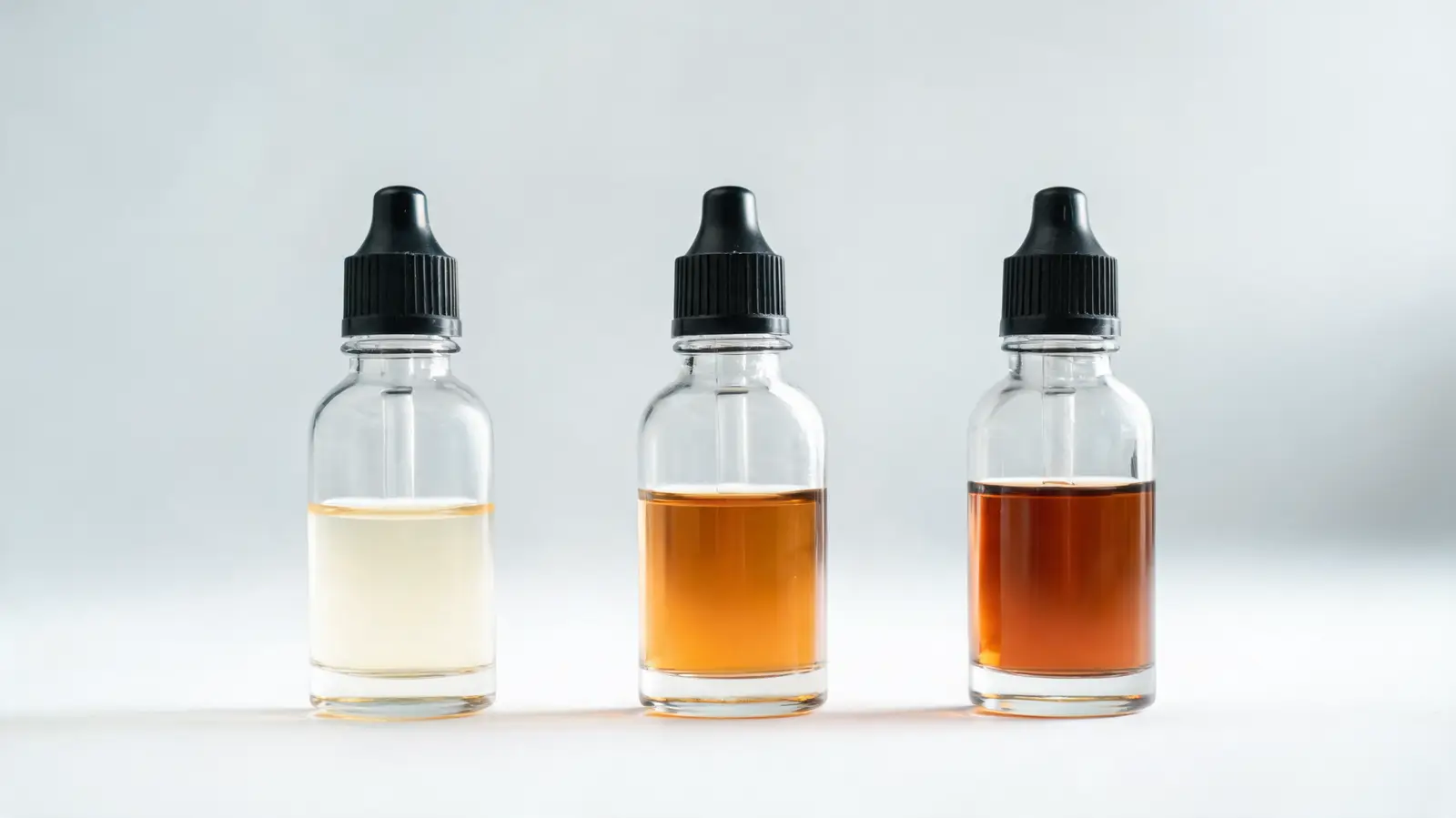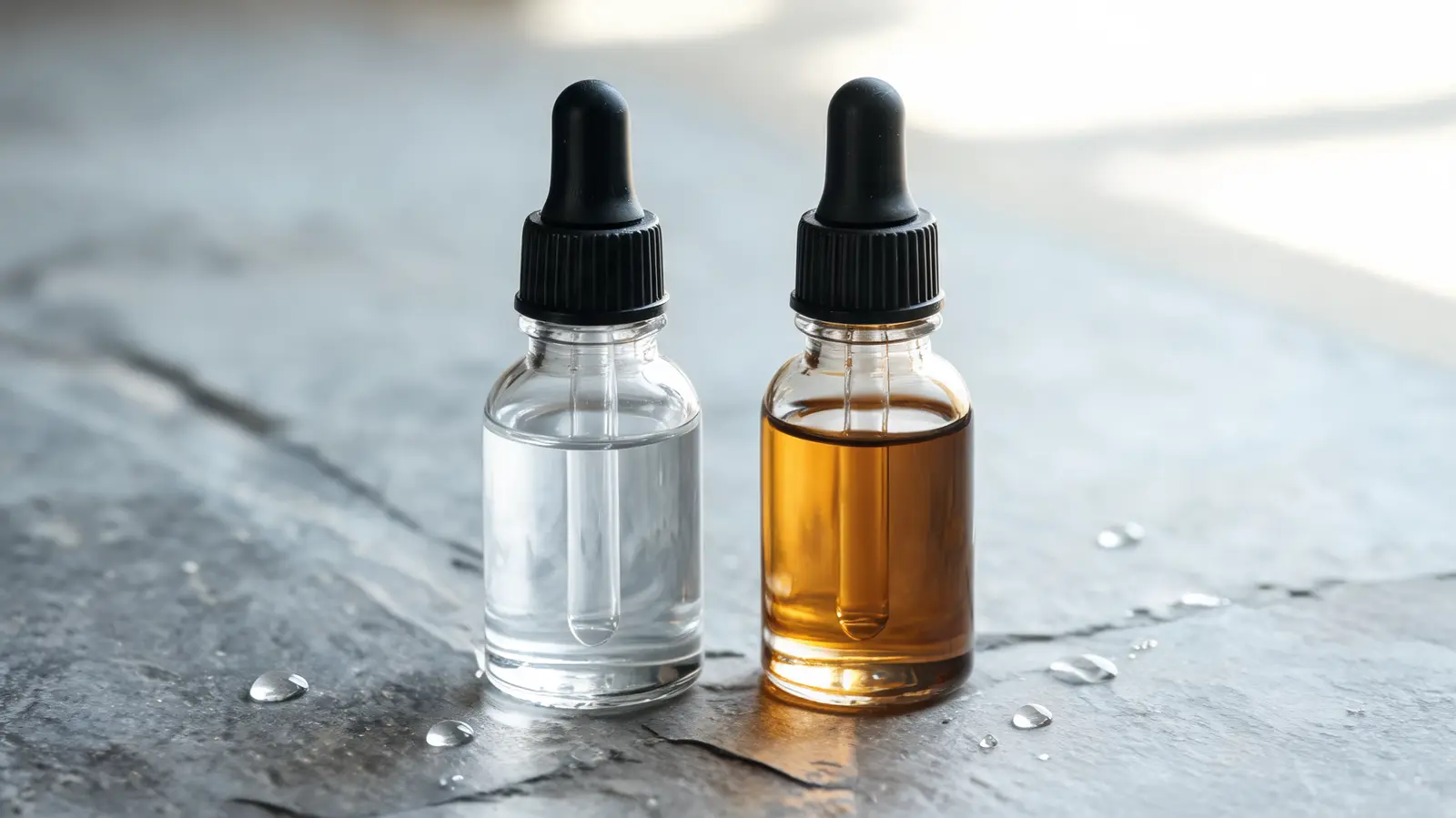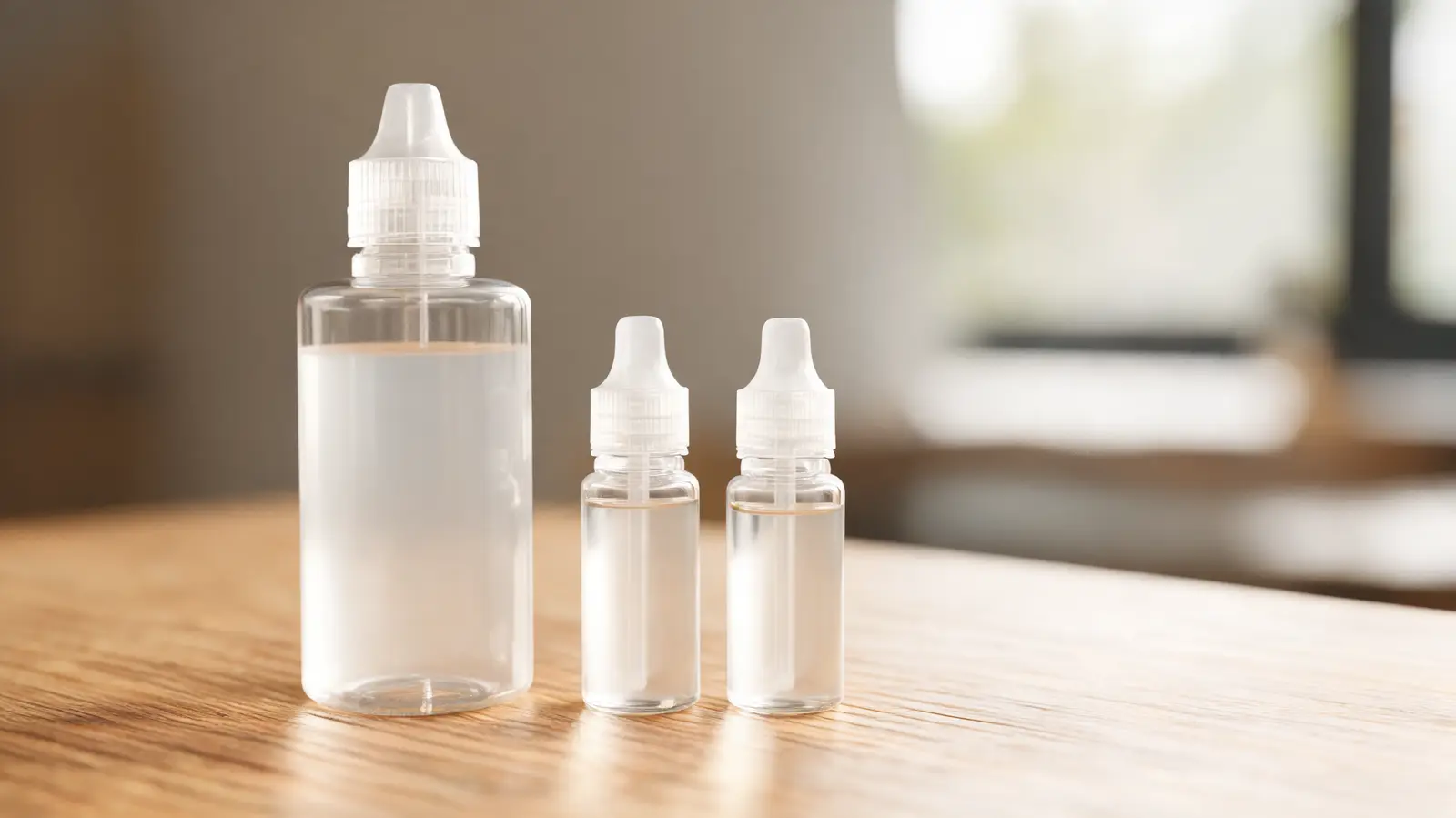
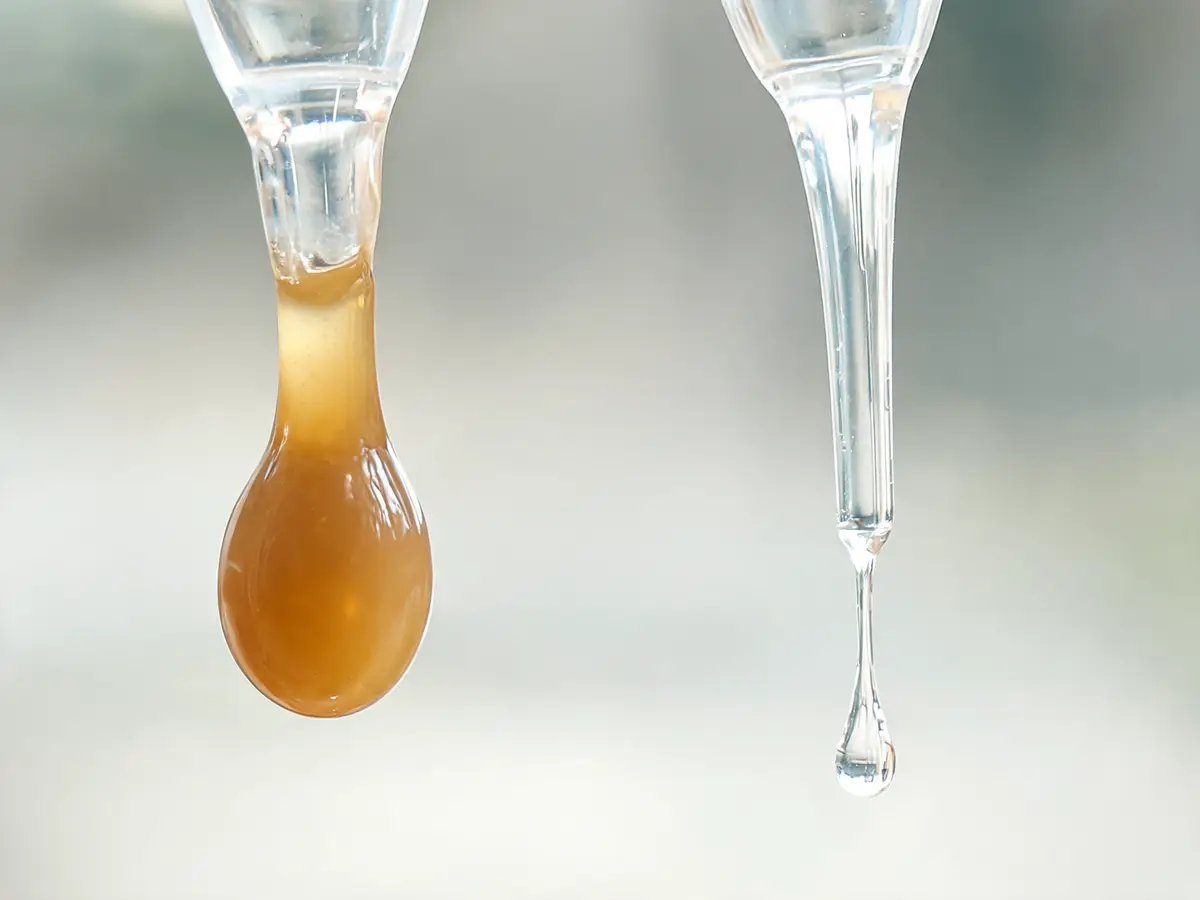
VG (vegetable glycerine) and PG (propylene glycol) are the two base liquids that make up most of an e-liquid. The ratio tells you how much of each is in the bottle. More PG gives a thinner liquid with a stronger throat hit and sharper flavour. More VG gives a thicker liquid with a smoother feel and more vapour. For pod kits, 50/50 is the usual choice. For big sub-ohm kits, 70/30 VG/PG or higher is common. Our e-liquid hub covers how the ratio fits with nicotine type and strength.
VG and PG at a glance
| VG | PG | |
|---|---|---|
| Thickness | Thick, syrupy | Thin, runny |
| Throat feel | Softer | Sharper, more "catch" |
| Vapour | More, denser clouds | Less |
| Flavour | Slightly sweet, can mute flavour a touch | Carries flavour clearly |
| Wicking in small coils | Slower | Faster |
Both are common ingredients in food and other consumer products. In e-liquid, they carry the nicotine and the flavouring.
Common ratios and what they suit
50/50. The default for nic salts and most 10ml liquids aimed at pod kits. Thin enough to soak into small MTL coils, thick enough not to leak easily.
60/40 VG/PG. A middle ground. Some pod coils at lower resistances handle it fine.
70/30 VG/PG and above. The standard for shortfills and sub-ohm liquids. Thick, cloud-heavy and smooth, but too slow to wick in many small pod coils. Our shortfills guide explains why those big bottles are almost always high VG.
High PG (for example 30/70 VG/PG). Less common now. Gives a strong throat hit and very clear flavour, but thin liquid can seep through some coils.
Why it matters for your coil
This is where the ratio actually affects your day. A small mouth-to-lung coil has small wicking holes and not much cotton. Thin liquid flows into it quickly. Thick liquid takes longer. If it can't keep up with your puffs, the cotton dries out and you get a harsh, burnt hit.
On the other hand, a low-resistance sub-ohm coil has bigger wicking holes. Thin liquid can flood it, which leads to spitting and leaks.
So the rough rule is:
- Small MTL coil, around 0.8 ohm and above: 50/50.
- Sub-ohm coil: 70/30 VG/PG or higher.
Our vape coil guide explains resistance in more detail. If you're getting dry hits after switching liquids, the burnt taste guide helps narrow it down. Leaks after a switch? See the vape leaking guide.
How the ratio interacts with nicotine
The ratio and the nicotine type tend to travel together.
Nic salts are almost always sold as 50/50, because they're made for pod kits. Freebase liquids come in everything from 50/50 at higher strengths to 70/30 or 80/20 VG/PG at low strengths for sub-ohm vaping. The nic salt vs freebase guide goes into the difference.
One more thing to watch: nicotine shots have their own VG/PG ratio. Adding a 50/50 shot to a 70/30 shortfill nudges the final mix a little thinner. The nicotine shot guide shows how.
Switching ratios: what to expect
If you change from a 50/50 nic salt to a thicker liquid, or the other way round, a few things happen at once.
Going thicker in the same pod, you might notice the first few puffs are fine and then the hits turn dry, especially if you vape in quick bursts. That's the coil running out of liquid faster than it can soak up more. Slow down and see if it settles. If it doesn't, the liquid is too thick for that coil.
Going thinner in a sub-ohm tank, you might get spitting, gurgling or a little liquid in the drip tip. That's the coil taking on more than it can vaporise.
Neither means the liquid is bad. It's just a mismatch. The fix is to pair the liquid with the right coil, not to force it.
Throat hit, explained
People talk about throat hit a lot. It's the catch at the back of the throat when you inhale. Three things affect it:
- Nicotine strength. The biggest factor.
- Nicotine type. Freebase feels harsher than nic salt at the same strength.
- PG content. More PG adds to the catch.
If a liquid feels too harsh, a higher-VG blend or a lower strength will usually feel softer. If it feels too soft and you miss the catch, more PG does the opposite. Our guide on what nicotine strength to vape helps with the strength side.
Reading the label
UK bottles list VG and PG on the label, but not always in the same order. Most brands put VG first, so 70/30 means 70% VG. Some do it the other way. Look for the letters next to each number before assuming.
You'll also see "MAX VG" on some shortfills. That means as much VG as the recipe allows once the flavouring is added, and it's thick. Not one for a pod kit.
Does VG/PG change flavour?
A little. PG carries flavour crisply, so fruit and menthol can taste brighter in higher-PG liquids. VG adds a faint sweetness. In practice, the flavour itself makes far more difference than the base ratio. If you're choosing by taste, the flavour library is the better starting point. A clean mint like cool mint is a good way to judge a new liquid base, because there's nothing to hide behind.
Questions people ask
What VG/PG ratio is best for pod kits?
Most pod kits work best with 50/50 liquids, which is what most nic salts use. Thinner liquid soaks into small MTL coils easily.
Can I use 70/30 in a pod kit?
Some pods with lower-resistance coils cope with it, but many small MTL coils struggle to soak thick liquid fast enough, which leads to dry or burnt hits. Check your coil's guidance.
Does the VG/PG ratio change the flavour?
It can. PG tends to carry flavour sharply, and VG adds a slight sweetness and a softer feel. The flavour concentrate matters far more than the ratio, though.
Is the ratio written as VG first or PG first?
Usually VG first, as in 70/30 meaning 70% VG and 30% PG, but some brands write it the other way round. Check the label for 'VG' and 'PG' next to each number.