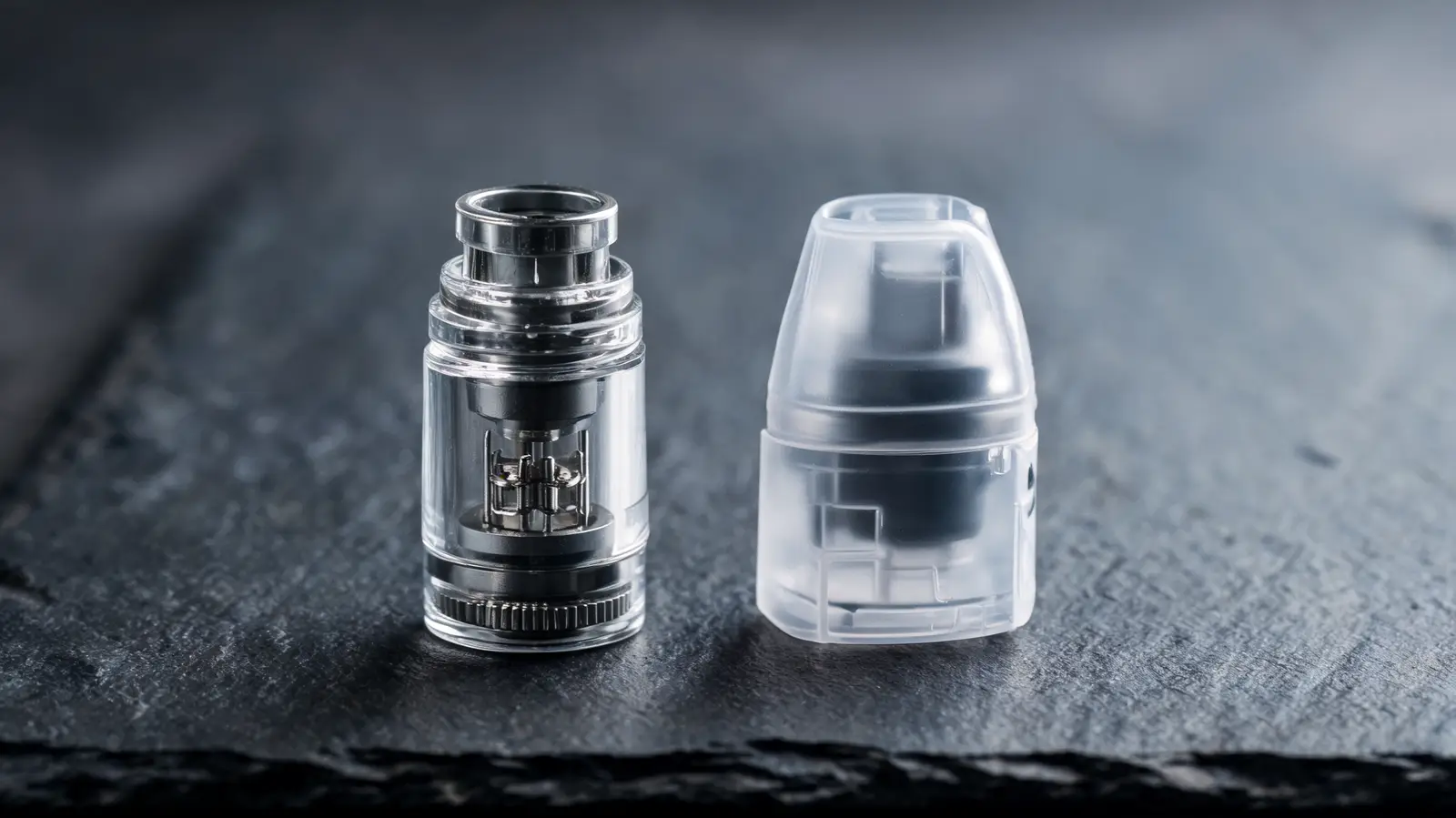
A vape tank is a separate container that screws onto a battery or mod and holds e-liquid around a replaceable coil. A pod is a small cartridge that clicks into a compact pod kit. Both are limited to 2ml for nicotine e-liquid in the UK. Pods win on size and simplicity and suit a tight, cigarette-style draw. Tanks win on control, airflow and coil choice, and are what you'd use for big-cloud, direct-to-lung vaping.
This guide is part of our vape kits hub, which covers every type of device.
What a vape tank is
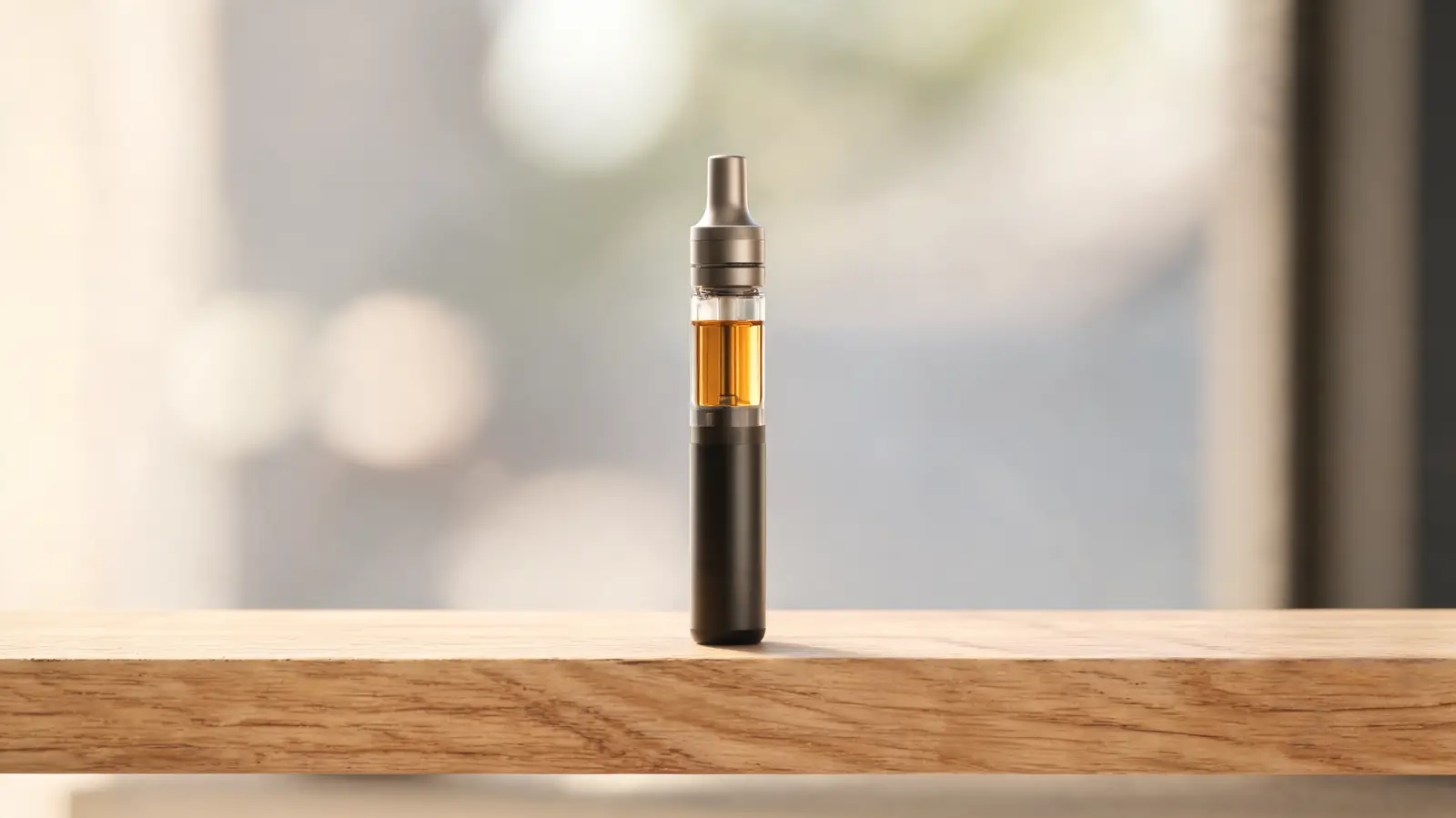
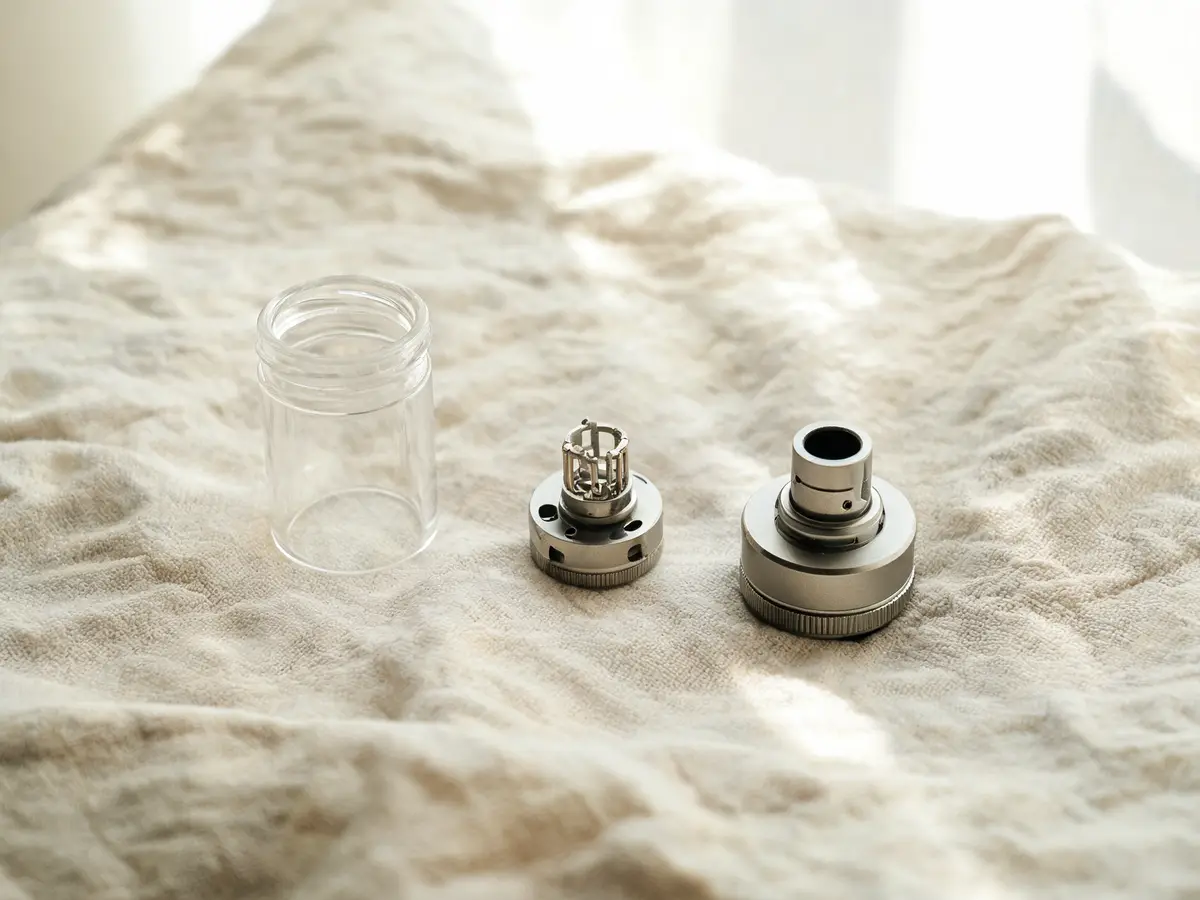
A tank is the top half of a traditional vape. It's usually a glass tube with metal ends, and it has four parts:
- The glass section that holds the liquid, so you can see how much is left.
- The coil head, a replaceable heating unit that screws or pushes into the base.
- An airflow ring at the base or top that you twist to open or close the draw.
- A 510 thread, the standard screw fitting that attaches the tank to a mod or battery.
Because the 510 thread is a standard, one tank can go on many different mods. That's the big difference from pods.
What a pod is
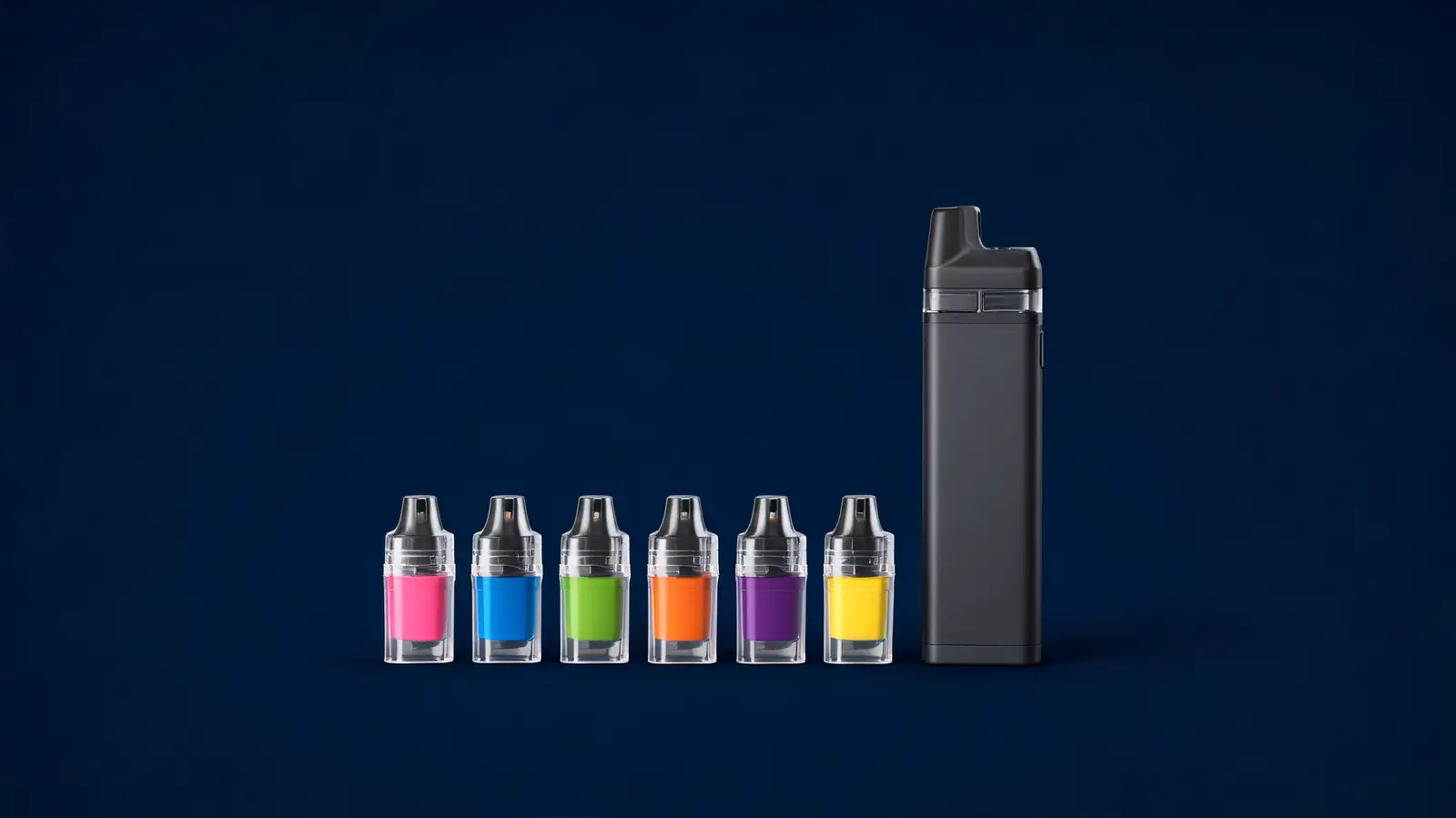
A pod is a self-contained cartridge that slots into a pod kit, usually held by magnets. There are two kinds:
- Prefilled pods come sealed with e-liquid and a coil inside. When it's empty you replace the whole thing. See prefilled pod vapes.
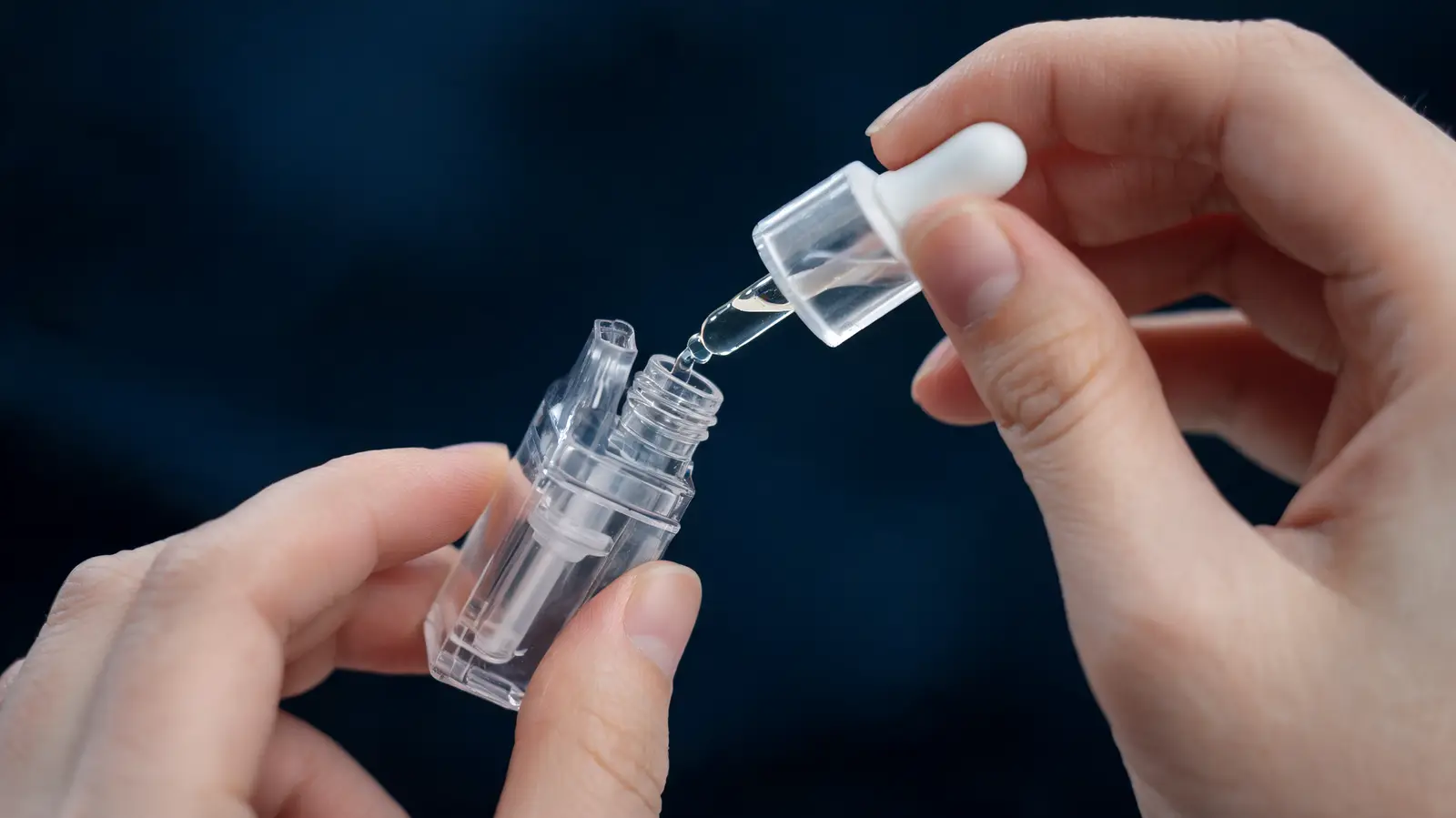
- Refillable pods you fill from a bottle. Some have the coil built in, others take a separate coil. See refillable pod vapes.
Pods only fit the kit they were made for, and sometimes a family of kits from the same brand. Our pods for vape guide covers compatibility.
Tank vs pod, side by side
| Tank | Pod | |
|---|---|---|
| Fits | Any mod with a 510 thread | Its own kit only |
| Max capacity (UK, nicotine) | 2ml | 2ml |
| Coils | Wide choice of replaceable coil heads | Built-in or a small set of plug-in coils |
| Airflow | Usually adjustable, often wide open | Fixed or a small slider |
| Typical draw | DTL, though MTL tanks exist | MTL, some RDL |
| Size | Bigger, sits on a mod | Small, pocketable |
| Effort | More: filling, coils, settings | Less, sometimes none |
| Usual liquid | Low-strength, high-VG freebase | 10mg or 20mg nic salt |
The UK 2ml rule
People coming from abroad sometimes expect bigger tanks. In the UK, regulation 36 of the Tobacco and Related Products Regulations 2016 says a tank for a refillable e-cigarette can't hold more than 2ml of nicotine liquid, and nicotine e-liquid can't be stronger than 20mg/ml or come in bottles over 10ml. So a UK tank and a UK pod hold the same amount. If you vape a lot through a tank at high power, you'll be refilling often.
When a tank makes sense
Go for a tank if you:
- Want a loose, airy draw and plenty of vapour.
- Use low-strength freebase, such as 3mg or 6mg, often mixed from a shortfill.
- Like trying different coils and adjusting wattage.
- Already own a mod, or want to keep the same tank across different mods.
Tanks reward people who like tinkering. They're also more to look after: priming, cleaning, checking seals, and matching the coil to your power setting.
When a pod makes sense
Go for a pod if you:
- Want something small enough for any pocket.
- Prefer a tight MTL pull, closer to a cigarette.
- Use nic salts at 10mg or 20mg.
- Don't want to think about wattage or coil resistance.
Most people moving off disposables land here. The pod vape kit guide explains how pod systems work.
Where vape pens fit
Vape pens are a halfway house. They use a small tank, often with a non-standard or 510 connection, on a round battery tube. The draw is usually MTL like a pod kit, but you change coils like a tank.
Coils: the real difference
Day to day, coils are where tanks and pods feel most different. A tank takes coil heads in a range of resistances, from higher-resistance MTL coils to low-resistance sub-ohm coils for DTL. A pod kit gives you fewer options, sometimes just one or two. More choice means more control, and more ways to get it wrong. Our vape coil guide explains resistance and when to change a coil, and if your tank or pod starts seeping, vape leaking covers the usual causes.
Maintenance compared
Living with each system is different too.
A tank needs a proper clean when you change flavours, otherwise the old one lingers. You'll check the O-rings now and then, keep the threads clean and replace the glass if it cracks. Coil changes mean emptying the tank or using a design that lets you swap the coil from the top.
A pod needs very little. A refillable pod gets a rinse and a dry when the coil goes, or gets replaced along with it. A prefilled pod needs nothing at all: when it's empty, it's done. The how long does a vape pod last guide explains what to expect between changes.
Which one?
If you want simple and small, use a pod. If you want control and big vapour, use a tank on a mod. The MTL vs DTL guide will tell you which draw style you're after, which usually settles the question.
Questions people ask
What is a vape tank?
A vape tank is a glass or plastic container that screws onto a vape battery or mod. It holds e-liquid and a replaceable coil, and usually has adjustable airflow.
Is a tank better than a pod?
Neither is better overall. Pods are smaller and simpler, and suit mouth-to-lung vaping. Tanks give more control over coils and airflow and are the usual choice for direct-to-lung vaping.
How much e-liquid can a vape tank hold in the UK?
A tank for nicotine e-liquid can hold no more than 2ml, under regulation 36 of the Tobacco and Related Products Regulations 2016. The same limit applies to pods.
Can I put a tank on a pod kit?
Usually not. Pod kits take their own pods. Tanks need a mod or battery with a threaded 510 connection.